John Peterson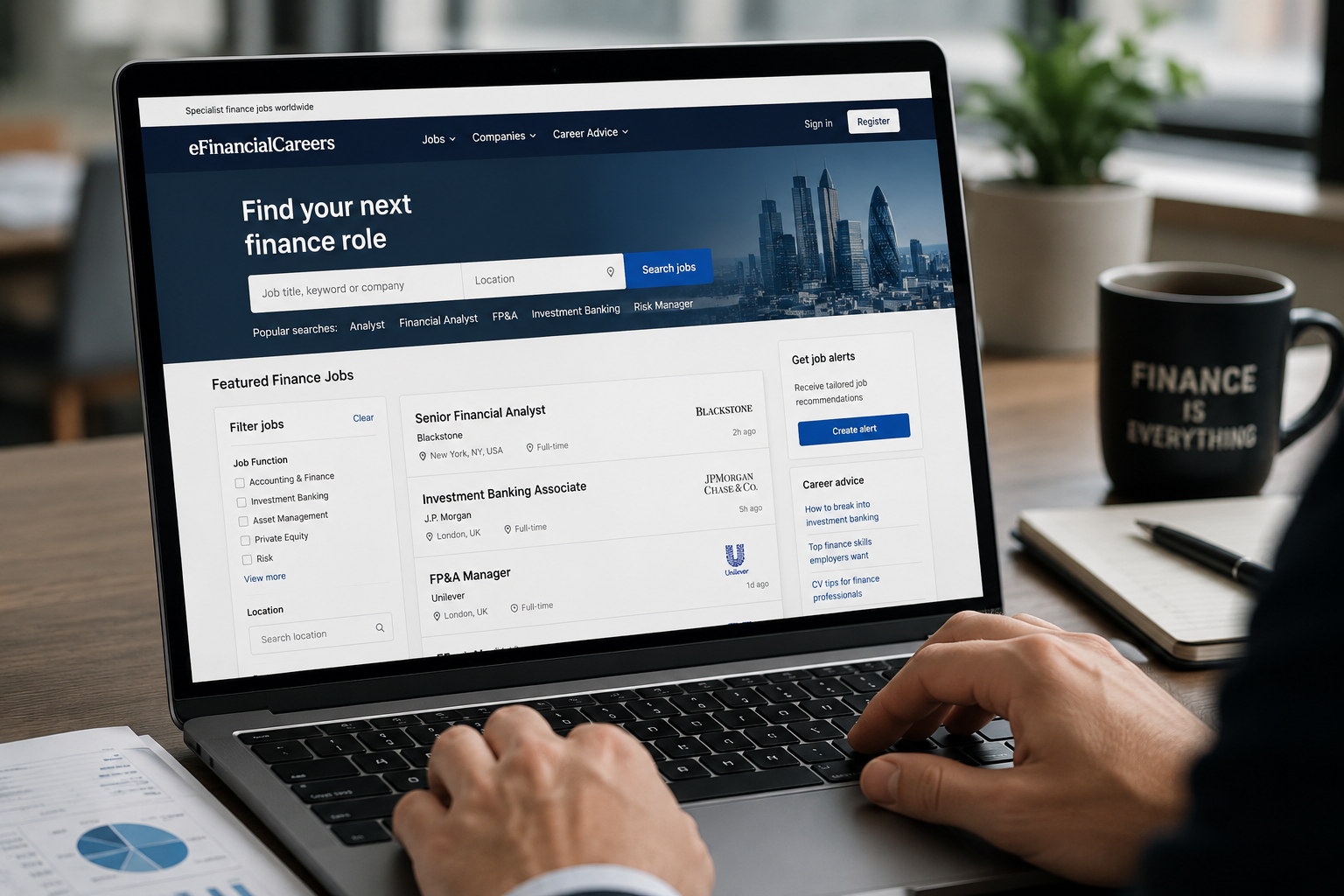
Job hunters looking for effective job search strategies in finance find the best roles by combining networking, recruiter relationships, and direct company outreach with — not instead of — a Google search, because most banking and finance openings are never posted publicly in the first place. Somewhere between 70% and 85% of all jobs, including finance roles, are filled through referrals, internal moves, and direct connections before they ever reach a job board (Zippia, 2026). If you’re only typing “finance jobs near me” into Google, you’re competing for a small, overcrowded slice of the market and missing the roles that never show up in results at all.
This guide breaks down exactly where banking and finance jobs actually get filled in 2026, and how to position yourself for the roles that never make it to a search results page.
Key Takeaways
- Up to 85% of jobs, including in finance, are filled through networking and referrals rather than public job postings (LinkedIn workforce report, 2025).
- Referred candidates are roughly 4 times more likely to land an interview and are hired significantly faster than cold applicants (CNBC careers data; Apollo Technical, 2026).
- There are over 374,000 open finance job listings in the U.S. right now, with financial analyst roles seeing the most demand (Zippia, 2026).
- 93% of financial services hiring managers say they struggle to find skilled candidates — which means qualified, proactive applicants have real leverage (Robert Half 2025 Salary Guide, via Talent MSH).
- Specialized finance recruiters, professional associations, and finance-specific job boards consistently surface roles that never appear in a general Google search.
Why a Google Search Alone Won’t Find You a Finance Job
Most banking and finance openings are filled long before a public listing goes live. According to industry research, 70% to 85% of positions are filled through networking, referrals, and internal promotions rather than being advertised on public job boards (Zippia, 2026). This gap is often called the hidden job market, and finance is one of the industries where it applies most heavily.
The reason is simple economics. Posting a role publicly, screening hundreds of applicants, and running a formal interview process is expensive and slow for employers. Recruiting via referral, by contrast, is roughly 47% faster than filling a role through job boards (TalentLyft data, via Standout CV, 2025). Banks and financial firms — especially for compliance, risk, and specialized technical roles — increasingly build relationships with candidates before a role even opens, rather than starting a search from scratch (Wayoh, 2026).
[CHART: Bar chart comparing % of jobs filled via networking/referrals (85%) vs. filled via public job postings (15–30%)]
For job seekers, this means a Google search or a scroll through Indeed only shows you the tip of the iceberg. To reach the other 70–85%, you need to show up in the places employers actually look first — starting with a properly optimized finance resume and a professional network that knows you’re looking.
How Do You Access the Hidden Job Market in Banking and Finance?
You access the hidden finance job market by building direct relationships with hiring managers, specialized recruiters, and former colleagues — before a role is ever posted. Referrals make up only about 7% of applicants but account for roughly 30–50% of all hires (industry aggregations, 2026), which makes them the single highest-leverage channel available to a job seeker.
Practical ways to tap into this hidden market in finance:
- Reconnect with former colleagues and managers. People who already know your work are the fastest bridge to unposted roles, especially as they move between banks, funds, and fintech firms.
- Build a two-page skills inventory, not a resume — a short document listing 6–8 core capabilities backed by measurable results (e.g., “reduced month-end close by 3 days”). Recruiters use this to match you against active, unposted searches.
- Talk to alumni from your university or CFA/CPA program. Alumni networks are consistently underused, even though alumni-to-alumni LinkedIn connection acceptance rates run around 82% (LinkedCraft, 2026).
- Follow up consistently. Networking isn’t a one-time ask; job seekers who conduct 5+ informational interviews a month are reported to be far more likely to receive unsolicited offers (CareerBuilder study, via The Interview Guys, 2026).
If your outreach messages need work, tools that help you draft a clear, confident cold email for job outreach can make this step far less intimidating.
LinkedIn Optimization: Making Recruiters Find You First
A strong LinkedIn profile matters in finance because 72–77% of recruiters actively use it to source candidates before posting a role publicly (EarthWeb, 2026). But simply having a profile isn’t enough — it needs to work like a landing page for recruiters searching finance-specific keywords.
Steps that make the biggest difference:
- Rewrite your headline to describe what you do and the role you want (e.g., “Financial Analyst | FP&A, Financial Modeling, SEC Reporting”) instead of just your current job title.
- Use finance keywords recruiters actually search: FP&A, credit analysis, risk management, financial modeling, GAAP, FINRA licenses, or your specific certifications.
- Engage before you need to. Commenting thoughtfully on posts from people at target banks builds visibility ahead of an active search, rather than starting cold once you need a job.
- Turn on “Open to Work” with recruiter-only visibility so you appear in searches without signaling to your current employer.
Pairing this with a polished LinkedIn summary for finance professionals and a resume tuned to applicant tracking systems (ATS) closes the loop between being found and actually getting shortlisted.
Work With Recruiters and Staffing Agencies That Specialize in Finance
Specialized finance and banking recruiters have access to roles that never get publicly advertised, because employers use them precisely to avoid the cost and time of a public search. This matters even more right now: 93% of hiring managers in financial services report difficulty finding skilled candidates, and only 49% of financial services hiring teams hit their 2024 hiring goals (Robert Half 2025 Salary Guide; GoodTime 2025 Hiring Insights, via Talent MSH). That gap works in your favor if a recruiter has your profile on file when the right search comes up.
How to work with recruiters effectively:
- Target boutique and finance-specific firms, not just generalist staffing agencies — firms that focus on banking, accounting, compliance, or risk have direct relationships inside target companies.
- Be specific about the role, salary range, and industries you want. Vague positioning like “looking for finance work” gets deprioritized; specific positioning like “senior financial analyst, FP&A, $95–115K, hybrid” gets matched to live searches.
- Stay in touch even when you’re not actively searching. Recruiters remember candidates who follow up periodically far more than those who appear once and vanish.
- Ask what’s changed in the market. Recruiters see which skills — like AI-augmented risk analytics, which is commanding 25–35% higher pay than the roles it’s replacing — are getting rewarded right now (Wayoh, 2026).
If you haven’t updated your resume for ATS compatibility, do that before reaching out — recruiters will often run your resume through the same screening tools employers use.
Go Directly to Company Career Pages and Decision-Makers
Bypassing job boards entirely and going straight to a target company’s careers page — and to the people who’d manage you — puts you ahead of candidates relying only on aggregators like Indeed or Google’s job listings. Company career pages are frequently updated before roles ever sync to third-party boards, and applying directly often routes you around the heaviest ATS filtering.
Direct outreach checklist:
- Identify 15–20 target employers (banks, asset managers, fintechs, insurers) rather than applying broadly to hundreds of postings.
- Check the careers page weekly, since finance roles at banks and asset managers often post there first.
- Send a short, specific message to the hiring manager or team lead on LinkedIn — not just HR — referencing something concrete about their team or a recent initiative.
- Request an informational interview even when there’s no open role; this is how you get considered when a position does open.
This approach pairs well with strong banking interview preparation, since direct outreach often leads to a conversation faster than a formal application process would.
Use Finance-Specific Job Boards and Communities
Niche job boards built specifically for finance and banking surface roles that get buried in Google’s general results or general boards like Indeed. Because these platforms are used almost exclusively by finance professionals and finance recruiters, competition per posting also tends to be more targeted.
Worth checking regularly:
- eFinancialCareers — focused specifically on investment banking, trading, and capital markets roles
- Wall Street Oasis job board — combined with active community discussion on compensation and hiring trends
- CFA Institute career center — roles that specifically value the CFA certification
- AICPA career hub — for accounting and CPA-track finance roles
- Company-specific and industry Slack/Discord communities, where roles are often shared before they’re posted anywhere public
Leverage Professional Associations and Certifications
Professional associations function as a built-in network and a credibility signal at the same time — many post members-only job boards and host events where hiring managers actively look for candidates. With 87% of financial firms now using skills-based hiring that prioritizes demonstrated competencies over degrees alone (Wayoh, 2026), association membership and certification can matter more than where you went to school.
Relevant paths depending on your track:
- CFA Institute for investment analysis, portfolio management, and research roles
- FINRA licenses (SIE, Series 7, Series 63/65/66) for anyone entering broker-dealer, trading, or wealth management roles — the SIE exam is typically the first step (STC, 2026)
- AICPA/CPA for accounting, audit, and controller-track roles
- Local CFA society or finance association chapters, which run networking events specifically designed to connect members with employers
These groups often maintain their own finance certification study resources and job boards that never surface in a general web search.
Attend Industry Events and Informational Interviews
In-person and virtual finance industry events put you directly in front of hiring managers at a stage when most roles haven’t been posted yet. Job seekers who conduct five or more informational interviews a month report being roughly 3.4 times more likely to receive an unsolicited job offer (CareerBuilder study, via The Interview Guys, 2026).
Where to find these opportunities in finance:
- Regional CFA society events, banking association mixers, and fintech meetups
- University and MBA alumni finance panels — even if you didn’t attend that program, many are open to the public
- Conference attendee lists (many finance conferences publish speaker and attendee directories you can reach out to ahead of the event)
- Company-hosted “office hours” or recruiting events, especially common at large banks during campus recruiting cycles
Frequently Asked Questions
What percentage of finance jobs are never posted online?
Estimates place the hidden job market at 70% to 85% of all roles across industries, including finance, meaning the majority of finance jobs are filled through referrals and direct outreach rather than public postings (Zippia, 2026; LinkedIn workforce report, 2025).
Is networking really more effective than applying online for finance roles?
Yes. Referred candidates are about 4 times more likely to get an interview than those applying through a job board alone, and they’re often hired significantly faster (Apollo Technical, citing CNBC careers data, 2026). That doesn’t mean you should stop applying online — it means networking should run in parallel with, not instead of, your applications.
Should I use a recruiter or apply directly to finance companies?
Do both. Specialized finance recruiters give you access to unadvertised searches and salary insight, while direct outreach to hiring managers builds relationships recruiters can’t replicate. Given that 93% of financial services hiring managers report difficulty finding skilled candidates, being visible through multiple channels increases your odds significantly (Robert Half 2025 Salary Guide, via Talent MSH).
How long does a finance job search typically take in 2026?
Reported averages vary, but job seekers who actively network report shorter average unemployment durations than those relying primarily on online applications, according to 2026 labor market data referenced by career researchers (BLS data, via The Interview Guys, 2026). Combining direct outreach, recruiter relationships, and a strong online presence tends to shorten the timeline compared to job-board applications alone.
Final Thoughts: Build a Multi-Channel Finance Job Search
Relying on a single Google search or job board for a banking or finance role means competing for the smallest, most crowded slice of the market. The candidates who land strong finance roles fastest combine several channels at once: networking for job seekers, specialized recruiters, direct company outreach, niche finance job boards, and professional associations. None of these replace a polished resume and solid interview skills — but together, they get you in front of the 70–85% of opportunities that never make it to a search results page.
Start with one channel this week — whether that’s updating your LinkedIn headline, reaching out to three former colleagues, or registering for your local CFA society’s next event — and build from there.
Sources referenced: Zippia (2026), Robert Half 2025 Salary Guide and 2026 Hiring Outlook, Talent MSH (2026), Wayoh Banking Recruitment Trends (2026), Apollo Technical (2026), LinkedCraft (2026), STC (2026), The Interview Guys (2026), Standout CV (2025), HR Dive (2025).